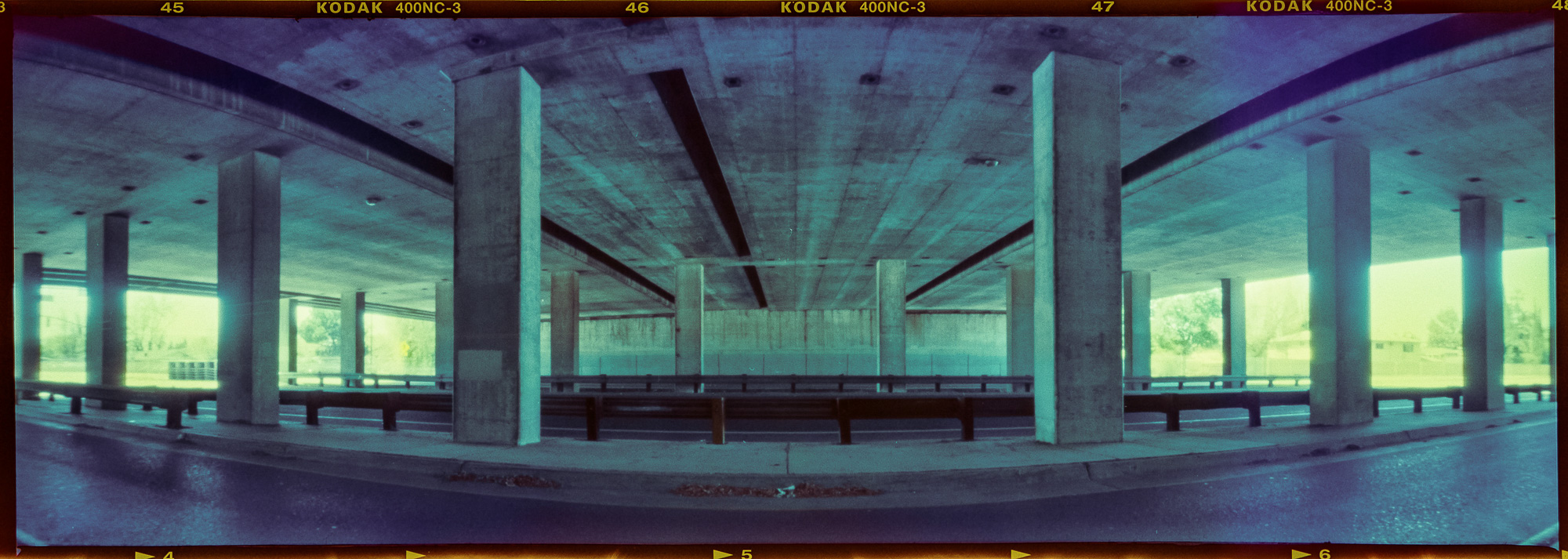
pinhole photo, Santa Clara, California
I love photography, I study photography, and I make a lot of photos. I share a new photo on Flickr almost every day, and I also have a portfolio and a (rarely-used) Instagram. Or, if you prefer, I will mail you prints.
Here are some interesting web pages I have found:
Yakumo Koizumi (Japanese: 小泉 八雲, Hepburn: Koizumi Yakumo; born Patrick Lafcadio Hearn; 27 June 1850 – 26 September 1904) was a Greek and Irish writer, translator, and teacher whose work played a significant role in the introduction of the culture and literature of Japan to the mainstream Western world.His middle name comes from the Greek island where he was born. He was also a major chronicler of New Orleans, documenting the city beyond its white aristocracy, including the early Filipino immigrants. But before any of that, he was writing newspaper articles championing Henrietta Wood, "a former slave who won a major reparations case."
The large monadnock mountain was thought to resemble a bullfrog and the Native Americans named it "Ratratrat," after the sound the animal makes. Early white settlers thought what they were saying sounded like "Ararat."Is it true? Unclear. Is it plausible? Well, yes.
Many pixels have been expended debating the 'best' order in which to read what have come to be known as the Vorkosigan Books, the Vorkosiverse, the Miles books, and other names, since I neglected to supply the series with a label myself. The debate now wrestles with some fourteen or so volumes and counting, and mainly revolves around publication order versus internal-chronological order. I favor internal chronological, with a few caveats.I, of course, am reading them entirely out of order.
It’s said that the very name comes from the view of the site from The Quarter -- the hundreds of Black figures seen from across the river reminded the Europeans of Algeria in Africa. Hence, the name Algiers. By 1731, 99% of Algiers’ population was enslaved, making it “the largest concentration of people of African ancestry in the entire region.”Yikes.
Secondly, in the late 1820s, France ... sent troops to colonize Algiers. To New Orleans’ French-speaking population, who were pointedly proud of their mother country, the name of Algiers ... took on positive symbolic meaning—just the sort of thing marketers like to tap into. It’s unclear who first applied the names “Algiers” ... to [this] particular West Bank subdivision, but, then as now, catchy names help sell real estate, all the more if they instill a sense of pride. “Algiers” as a neighborhood name started appeared in newspapers in the 1830s... In this same era, a number of uptown streets were named to commemorate Napoleon’s conquests, with a principle avenue named for the emperor himself. That same intersection of ethnic pride with real estate marketing probably explains Algiers.I am more convinced by this second etymology.
The Cenepa War was the most recent military clash between Ecuador and Peru over a long-standing territorial dispute that dated back to the first decades of the 19th century, when both countries came into being after the Wars of Independence of the Spanish colonies in South America.
I don't know why I bother searching for deeper meaning, as if I live in Thomas Pynchon's The Crying of Lot 49, yet I keep doing so. Los Angeles video game designer Laura Michet had a similar curiosity October a year ago:
I'm sure that this is a two-person project, since you can google up each of these graffiti writers individually and find traces of them online. I've wondered whether more than two people are putting them up, though - they're incredibly dense, all over the city. Most of the time when I'm riding on a major stroad or artery in the city, I'll see one of these at least once a minute - often more frequently! Apparently, you can find them in Toronto and SF too.
If you have ever been to a port during a national holiday or a major celebration, you have likely seen a vessel looking like it is decorated for a massive party. This stunning display, where a ship is covered from bow to stern in colorful flags, is known as Full Dressing (or Dressing Overall).
In Mahjong's 'bamboo' suit, each of the tiles depicts a number of bamboo sticks corresponding to the tile's value: e.g. 3 Bamboo shows three sticks of bamboo. Except 1 Bamboo, which depicts... a bird. Why?
Nobody really knows. But this website proposes a theory, complete with having found very old examples of the 1 Bamboo tile artwork and its evolution from something sometimes resembling a bamboo sprout into a crane or peacock.